

Smart Home Gadgets vs. KNX: Where Consumer Tech Ends and Engineering Begins
The smart home market has effectively split into two fundamentally different directions. On one side are affordable DIY solutions: Sonoff, Tuya, Xiaomi, Aqara, along with integrations for Alexa, Apple HomeKit and Google Home. These devices allow homeowners to automate specific functions in a flat or house quickly and at relatively low cost. On the other side are professional building automation systems: KNX, Loxone, Control4, Crestron, HDL and similar platforms used in private villas, commercial real estate and hospitality projects.
At first glance, the result may appear similar: lights can be controlled from a smartphone, blinds operate automatically, climate adjusts itself. However, the real difference lies in system architecture, operational principles, reliability and lifecycle. To make an informed decision, it is essential to understand the technical distinctions between consumer “gadgets” and engineered automation systems — not just the marketing claims.
Why Do You Actually Need a Smart Home?
Many people view a smart home as an expensive novelty. But once the initial “wow effect” is removed, four fundamental factors remain: Comfort, Energy Efficiency, Security and Reliability. The real distinction between DIY gadgets and professional automation lies in how these objectives are implemented.
Comfort: An Ecosystem vs. A Collection of Apps
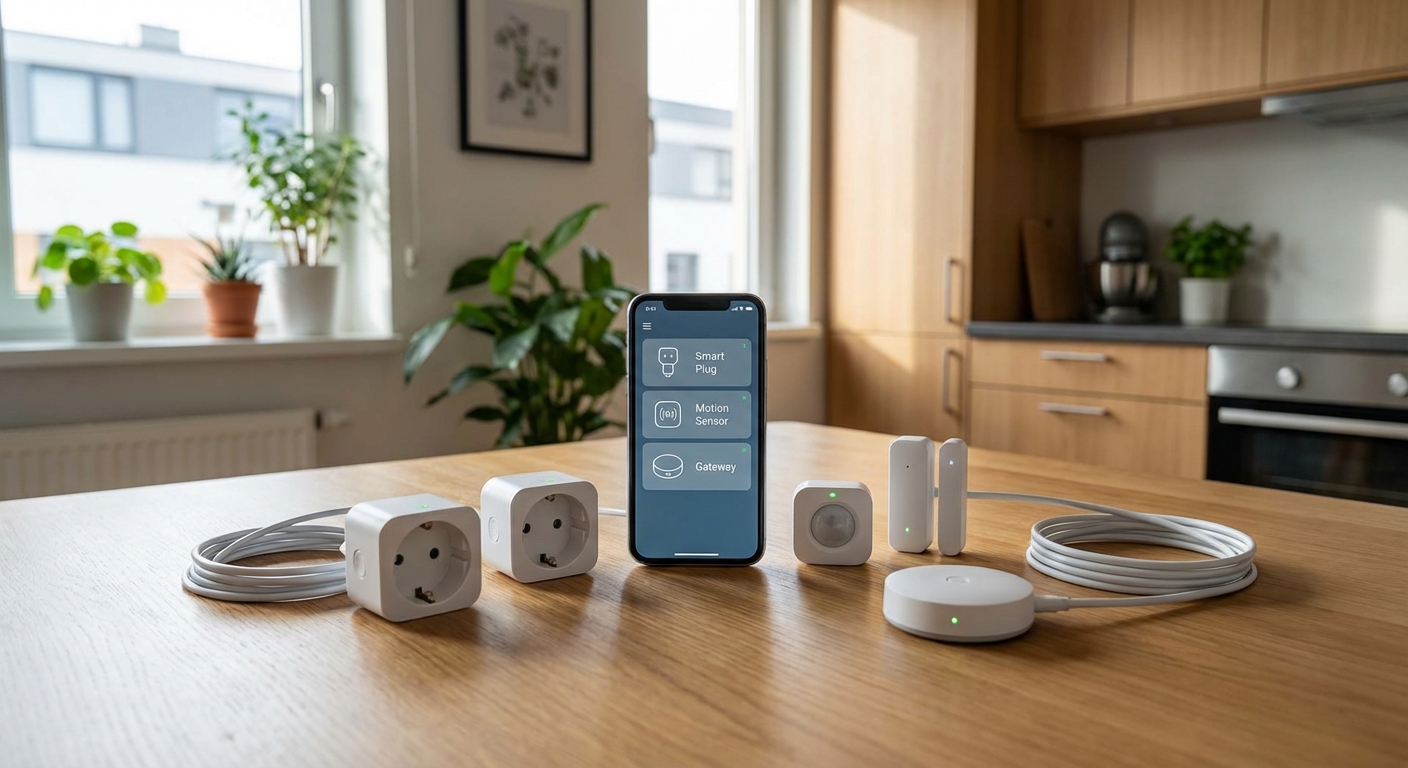
DIY solutions — whether Tuya Smart, Sonoff, Xiaomi Mi Home, Aqara or HomeKit — are typically built around cloud-based apps and wireless devices (Wi-Fi, Zigbee, Bluetooth). The entry process is simple: purchase the device, connect it, add it to the app and link it with Alexa or Siri.
However, as the system grows, limitations become more noticeable and begin to affect overall comfort:
· multiple apps for different brands
· dependence on cloud services
· complexity when integrating devices from different manufacturers
Professional Approach (KNX):
KNX is an international building automation standard (ISO/IEC 14543) with over 30 years of development and global adoption.
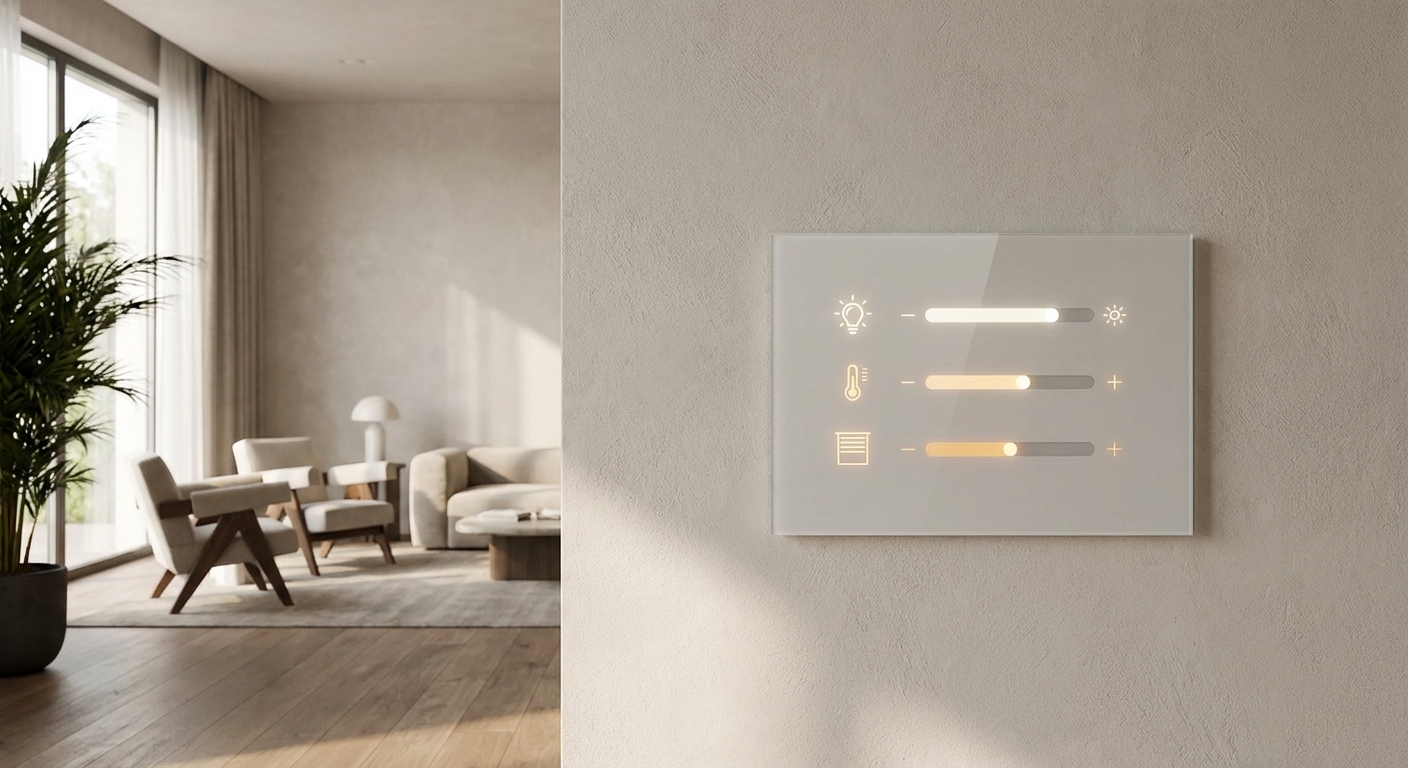
Design Instead of Clutter: A single elegant wall-mounted module can replace multiple light switches, a thermostat and blind controls. Finishes can be selected in stone, metal or glass from leading European design manufacturers.
Scene-Based Control: You do not configure each light individually. A single button press can dim the lighting, close the blinds and adjust the temperature simultaneously. This is not a set of isolated automations — it is unified building logic.
Energy Efficiency: Timer vs. Algorithm
Gadgets can switch lights off on a timer. A professional KNX system manages building resources on a fundamentally different level. It integrates lighting, heating, ventilation, air conditioning, blinds and weather stations into one coordinated system.
For example:
· a presence sensor lowers the temperature in an unoccupied room
· a weather station closes blinds to prevent façade overheating
· the system analyses temperature and humidity to prevent condensation
This reduces strain on HVAC equipment and improves overall building efficiency. In larger properties — villas, offices, hotels — this integrated approach delivers measurable savings.
Monitoring and Security: Depth of Control
DIY devices (Sonoff, Aqara, Xiaomi) typically provide:
· water leak detection
· smoke detection
· smartphone notifications
When triggered, the user receives an alert and must respond manually. This is a reactive model: the system reports the event but does not manage its consequences. The question remains — is a notification always enough to prevent damage?
Professional automation systems (KNX, Loxone, Crestron and others) operate differently. The system does not simply detect an issue — it executes pre-programmed protective scenarios.
In advanced projects, this may include:
· automatic water shut-off via motorised valves upon leak detection
· ventilation shutdown and gas cut-off when smoke is detected
· automatic ventilation adjustment if CO₂ levels exceed thresholds
· main supply shut-off in case of abnormal water consumption
Additional integrations may include:
· automatic gas shut-off in case of leakage
· fire alarm integration with lighting and access control
· continuous monitoring of technical building systems
The difference lies not in the presence of a sensor, but in the system’s response: a notification is a gadget; automated protection is engineering.
Such architecture transforms a smart home from a collection of sensors into an active building protection system.
Reliability: Wired Architecture vs. Wireless Dependence
The core difference between DIY solutions and professional automation is architectural.
Most consumer devices operate via wireless protocols (Wi-Fi, Zigbee, Bluetooth) and often rely on cloud infrastructure. While suitable for small installations, this approach depends heavily on network quality, router stability and internet availability. Under heavy Wi-Fi load or cloud interruptions, certain functions may become unavailable.
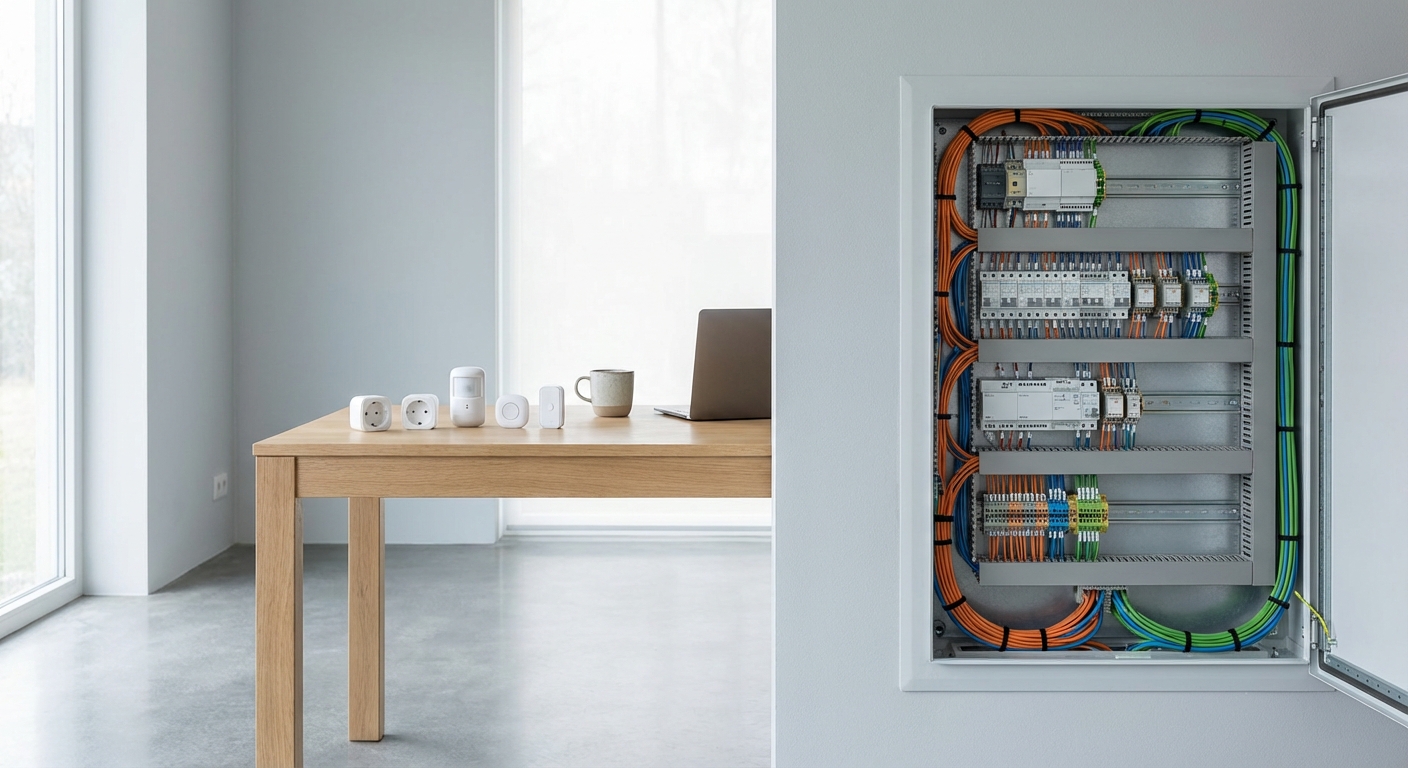
Professional automation systems are built differently. In a classical configuration, a wired bus connects devices directly, allowing communication without reliance on the internet. Control is decentralised: there is no single “master brain” upon which the entire system depends. Each module performs its function independently, meaning the failure of one component does not disable the entire installation.
Engineering-grade systems are also designed with scalability and load management in mind. They can reliably manage dozens or hundreds of devices without latency or instability.
Reliability, therefore, is not about branding — it is about architecture. Gadgets prioritise accessibility and quick deployment. Engineered systems prioritise stability over decades of operation.
Cost: Where Does the Budget Difference Come From?
The difference in budget between consumer-level solutions and professional automation primarily reflects system architecture and design methodology.
Wireless devices and cloud ecosystems are well suited for localised automation of individual functions. However, as the number of devices increases, network load grows and system logic becomes more complex.
Professional automation systems are designed for comprehensive building management. They are based on standardised architecture and engineered for long-term scalability and operational stability, whether in a private residence, office or commercial property.
Another critical factor is compatibility and lifecycle. Engineering systems rely on open protocols supported by multiple manufacturers, enabling upgrades and servicing years later without complete infrastructure replacement.
Ultimately, the cost difference reflects not just hardware, but a fundamentally different approach: isolated automation features versus systematic building engineering.
What Should You Choose?
For a small apartment where you simply want to:
· control lighting via Alexa
· integrate Apple HomeKit
· build a compact DIY setup
— consumer solutions are often sufficient.
However, when the project involves:
· a private villa
· a commercial property
· an office building
· a long-term investment asset
where reliability, scalability and architectural integrity are essential, professional automation systems (such as KNX) offer clear structural advantages.
Would You Prefer Your Home to Be a Stable Asset Rather Than a Collection of Fragile Gadgets?
The UNCOM team specialises in the design and turnkey implementation of KNX-based automation systems. We create engineering solutions that operate discreetly, reliably and sustainably for decades.
